Hard water, explained

How hard water works — and how softening fixes it

City and rural-district water around Wichita, Andover, Derby, and Goddard is typically hard. That is not a contamination scare. It is dissolved calcium and magnesium. Those minerals are why faucets crust, glasses spot, soap does not rinse, and water heaters scale.

The problem

What “hard water” actually means

Rain picks up calcium and magnesium as it soaks through rock and soil on its way to rivers, reservoirs, and wells. Water carrying a lot of those dissolved minerals is called hard. The U.S. Geological Survey classifies water above about 7 grains per gallon (roughly 120 mg/L as calcium carbonate) as hard.

The City of Wichita’s 2026 Water Quality Report lists total hardness of 130 mg/L (about 7.6 gpg, sampled April 21, 2025), and its2025 report lists 170 mg/L (about 9.9 gpg, sampled May 21, 2024). USGS rates 121 to 180 mg/L as hard. Your own utility’s annual Consumer Confidence Report (CCR) is the source of truth for your address.

The minerals stay invisible while the water is cold and moving. When water heats up or dries on a surface, they drop out as a chalky white scale — on fixtures, on glass, and inside pipes and the water heater.

Hardness is not a drinking-water safety rating. It describes minerals that wear on a household — fixtures, appliances, and cleaning time.

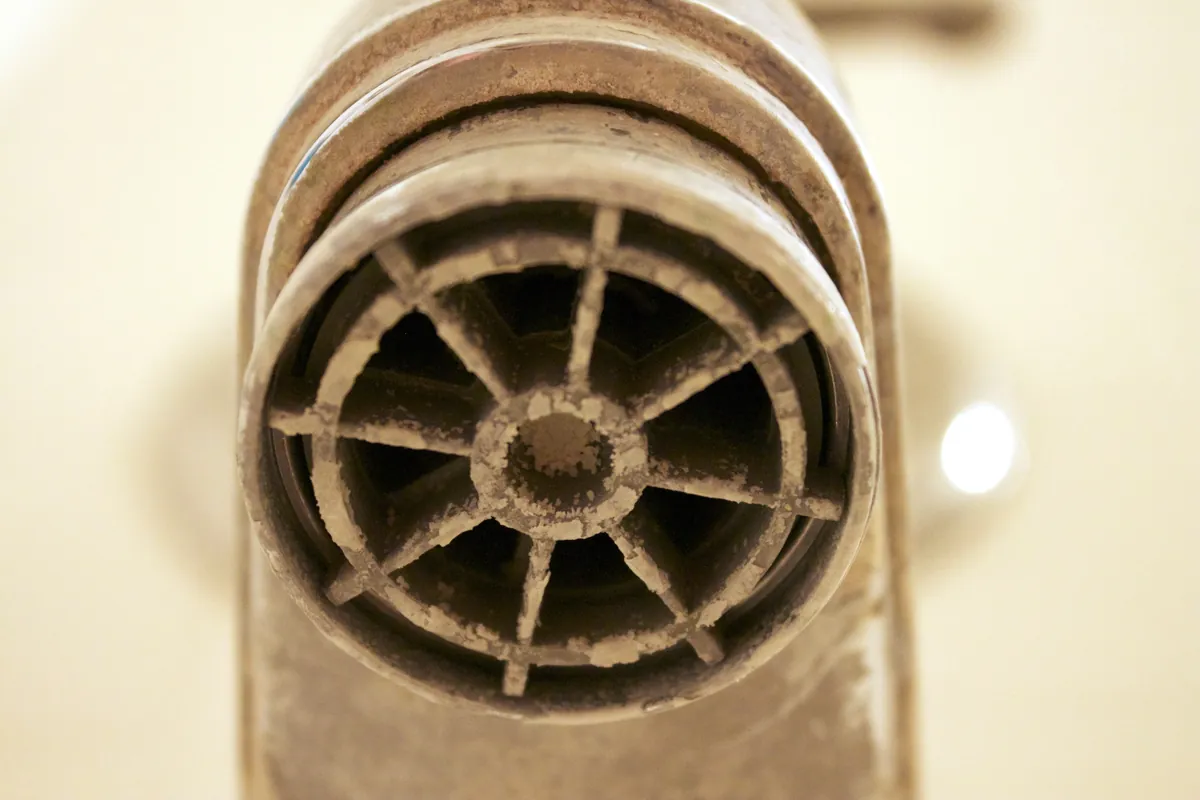
Close-up of a tub faucet spout crusted with white limescale from hard water
Scale on a faucet is the same mineral that coats pipes and the water heater.
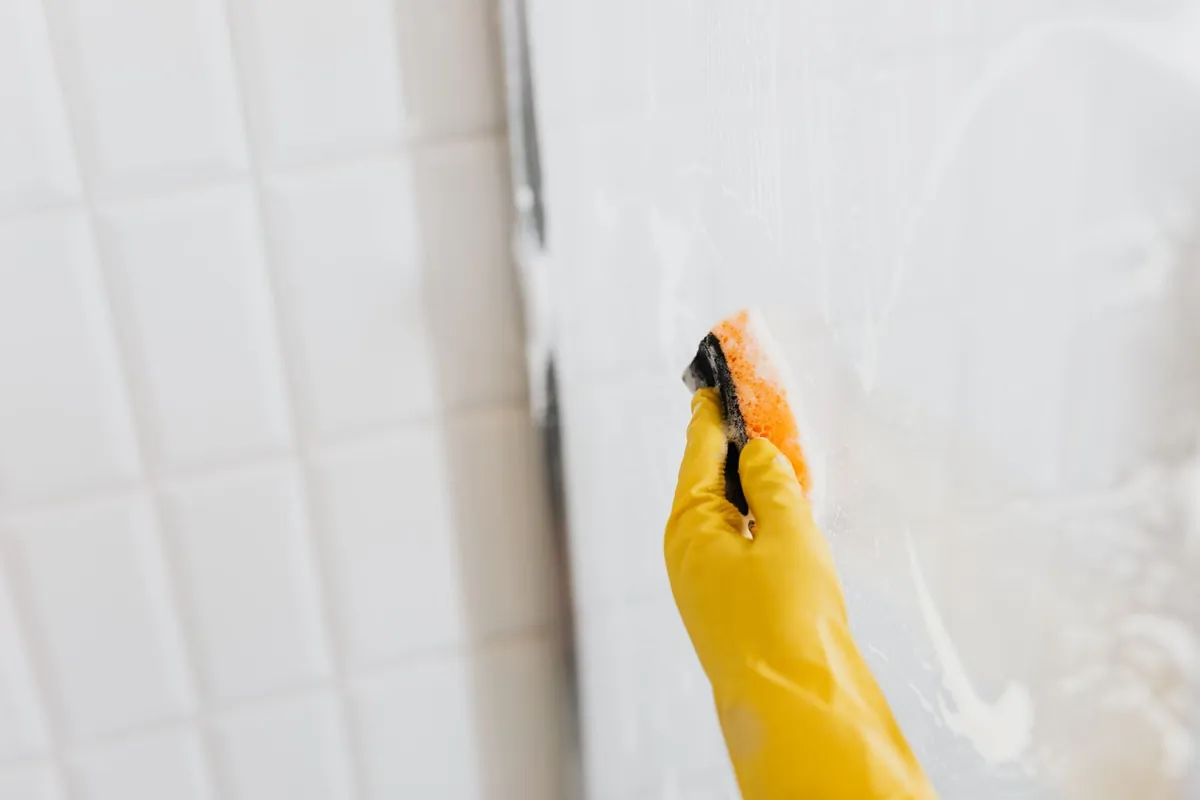
Gloved hand scrubbing a hazy film off a glass shower door with a sponge
Shower film is hardness plus soap.

The solution

A softener swaps the hardness out

A salt-based water softener does not screen minerals out like a strainer. It trades them, through a process called ion exchange.

  1. Resin beads start charged.The softener tank is filled with tiny resin beads loaded with sodium (or potassium, if you use potassium chloride instead of salt).
  2. Hardness sticks.As hard water flows through, calcium and magnesium cling to the beads more strongly than sodium does.
  3. Sodium lets go.A matching amount of sodium comes off the beads and into the water.
  4. Soft water goes to the house.Water leaving the tank has had its hardness minerals removed, so it leaves far less scale behind.
Ion exchange diagramHard water carrying calcium and magnesium enters a tank of resin beads. Calcium and magnesium stick to the beads, sodium is released, and soft water flows out to the house.Hard water inCaMgCaMgCacalcium + magnesiumResin tankCaMgCaMgCaNaNaNaNaNaNaNaNaNaNaNaNaNahardness sticks · sodium lets goSoft water outNaNaNato every tap
Ion exchange: calcium and magnesium trade places with sodium on the resin beads.

Regeneration: why you add salt

Eventually the beads fill up with hardness. The softener then runs a short regeneration cycle: salty brine from the salt tank washes through the resin, knocks the calcium and magnesium loose, and sends them down the drain. The beads come out recharged with sodium and ready to go again.

That brine is where the salt goes — which is why you top off the salt tank a few times a year.

The Jackrabbit whole-home unit

The Jackrabbit Complete Home Water System uses a mixed bed of softening resin plus carbon in one whole-home tank, on a demand-initiated valve. That valve regenerates based on how much water your household has actually used — not on a fixed clock — so it is not wasting salt and water on a schedule.

Kitchen reverse osmosis (RO) is a separate system. Softening treats the whole house. RO treats the drinking tap.

Where a two-tank softener goesLine drawing: the main water line comes in from the street, passes through a bypass and the resin tank with its control valve, which is connected to a brine (salt) tank and a drain. Softened water then feeds the water heater and the rest of the house.Main line incity or rural-district waterDemand-initiated valveResin tankBrine (salt) tankbrine lineto drainsoft waterWater heaterCold tapsHot tapswhole house: showers,laundry, dishwasher
Two-tank setup: the resin tank and brine tank sit on the main line, before the water heater, so hot and cold water are both softened.

The benefits

What changes after it is in

What you notice

  • Less new scale on faucets, showerheads, and inside the water heater
  • Glasses and shower glass rinse cleaner
  • Soap, shampoo, and detergent lather, so you can use less
  • Softer-feeling laundry and showers
  • Water heaters and appliances are not working inside a layer of mineral scale

What a softener does not do

  • Remove iron stain, sulfur (rotten-egg) smell, or well odor
  • Replace a reverse osmosis system at the drinking tap
  • Turn a private or shared well into a complete city-water package

Right now we work with city and rural-district water. On a well, or seeing stain or smell? Say so on the quote form so we can tell you plainly whether a softener is the right fit.

Next step

After you request a quote

We confirm whether you are on city or rural-district water, how many people live in the home, and whether there is an existing softener. Then we size the system to your household.

Photo credits: faucet — “Hard Water Calcification” by Bbypnda, CC BY-SA 3.0, via Wikimedia Commons (resized). Shower glass — Kaboompics via Pexels (Pexels License). Diagrams by Jackrabbit Water.

CallGet a Quote